Don’t shelters already have enough on their plate?
Yes. Absolutely. And that is precisely why South Africa needs a practical system of Shelter Minimum Standards, backed by a professional body that can help shelters meet them.
Across South Africa, shelters and rescue organisations are doing incredibly difficult work, often with limited funding, overstretched teams, too many animals and too little access to professional support.
Many are trying to manage animal care, veterinary needs, adoptions, fundraising, volunteers, staff, finances, governance, compliance and community outreach, often all at once.
This initiative brings together a shared framework, professional expertise, training, resources and practical support to help organisations navigate those challenges and build stronger, more sustainable shelters.
This is not about giving shelters another rulebook.
The Minimum Standards are not intended to become another checklist for shelters to complete, or another organisation telling them what they are doing wrong.
They are intended to provide a shared roadmap for companion animal welfare in South Africa.
A roadmap that recognises that shelters do not all start from the same place.
A small rural rescue with limited resources cannot be expected to operate in exactly the same way as a large, established organisation with a full-time team and access to significant funding.
The goal is therefore not to demand perfection overnight. It is to provide a framework that helps organisations understand where they are, identify areas for improvement and work towards stronger animal welfare and organisational practices over time.
And the standards are only part of the picture.
A set of standards is only useful if organisations have the support and resources to work towards them.
That is why this initiative also includes the development of a national professional body for dog and cat welfare organisations in South Africa.
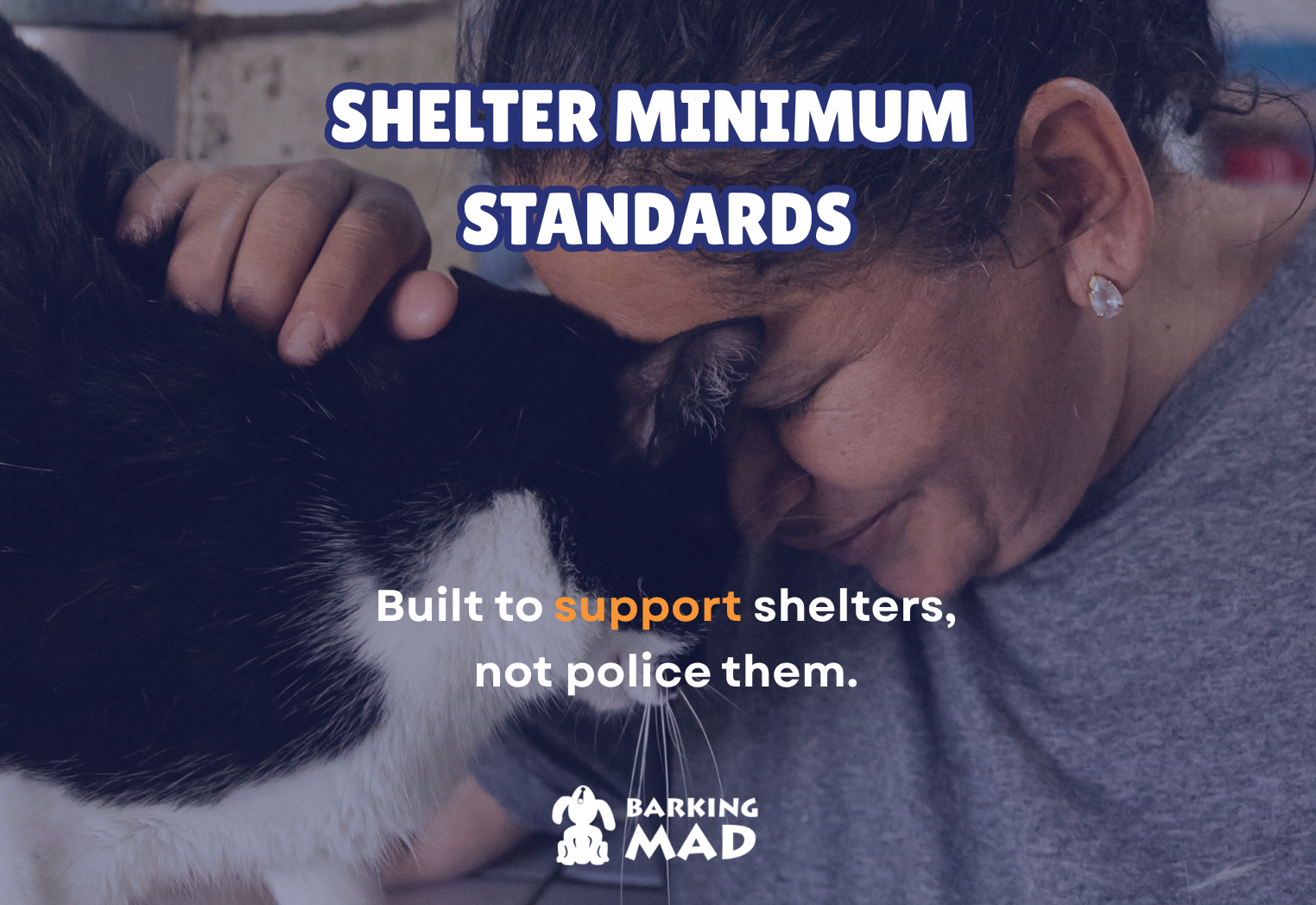
Its purpose is not to police shelters.
It is to support, strengthen and uplift them.
The professional body will aim to provide access to training, professional development, practical resources, sector representation, accreditation pathways and expertise across areas such as animal care, behaviour, governance, finance, fundraising, compliance and organisational management.
In other words, the standards show us where we are going. The professional body helps shelters get there.
What could that support look like?
Sometimes it may be something as practical as helping an organisation develop an SOP.
Sometimes it may be guidance on governance, financial systems, NPO compliance or operational procedures.
It could mean training staff and volunteers in animal behaviour, enrichment or handling.
It could mean helping a shelter understand its own data so that it can identify trends in intake, adoptions, sterilisation, returns to owner or euthanasia.
It could mean connecting an organisation with someone who has expertise in fundraising, governance, veterinary care, behaviour or another area where it needs support.
And sometimes, it may simply mean having somewhere to turn when an organisation encounters a problem it has never faced before.
The shelters themselves have helped shape this.
These standards have not been developed in isolation from the organisations expected to use them.
Shelters and rescues have been engaged throughout the process, contributing their experiences, challenges and practical knowledge.
That matters because a standard that looks good on paper but cannot work in a South African shelter environment is not much of a standard at all.
The aim is to create a framework that is practical, achievable and grounded in the realities of the sector.
It should recognise both the challenges organisations face today and the potential they have to improve tomorrow.
This is about building capacity, not finding fault.
There will always be differences between organisations. Some will have strong governance but struggle with animal behaviour. Others may provide excellent hands-on care while needing help with policies, financial systems or fundraising.
Minimum Standards give organisations a way to identify those gaps.
Support, training and professional development give organisations a way to address them.
Over time, better systems can mean more sustainable organisations, better-informed decision-making, greater consistency in animal care and, ultimately, better outcomes for the animals depending on them.
This is not about arriving with a clipboard and pointing out everything that is wrong.
We want to be coaches, not referees.
Because the question should not be:
“Why isn't your shelter already doing this?”
It should be:
“What would help your shelter get there?”
And that is the question this initiative is designed to answer.